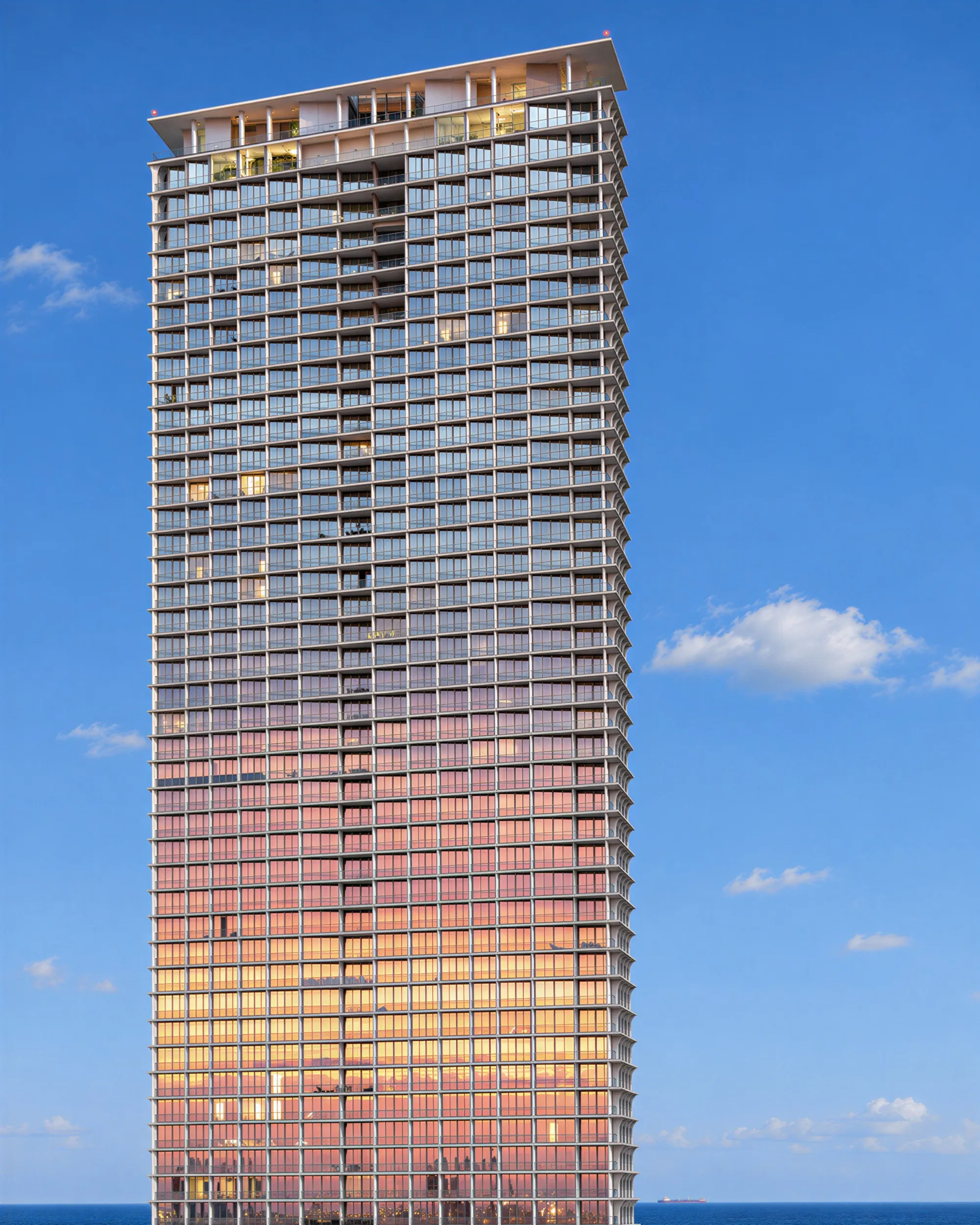
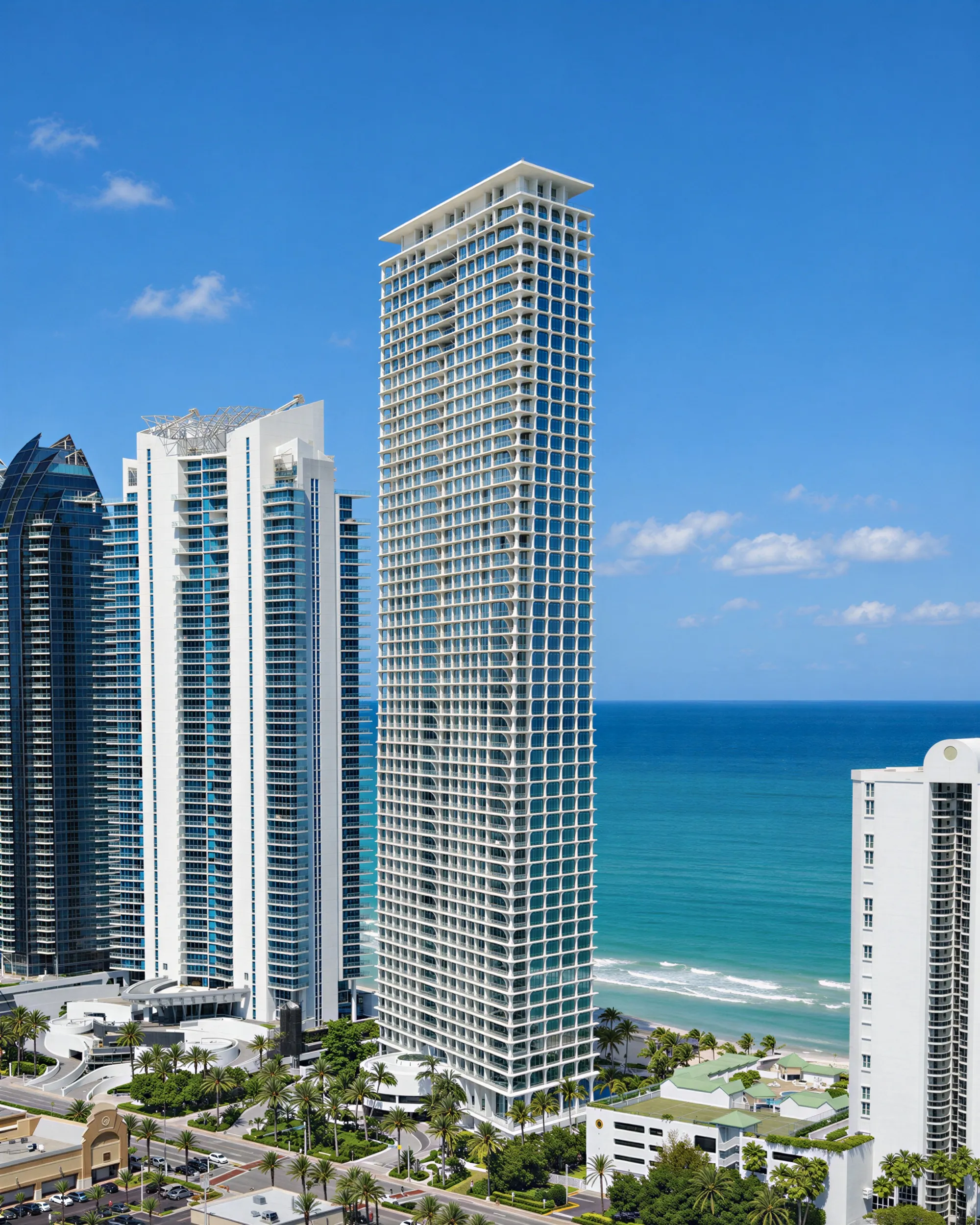
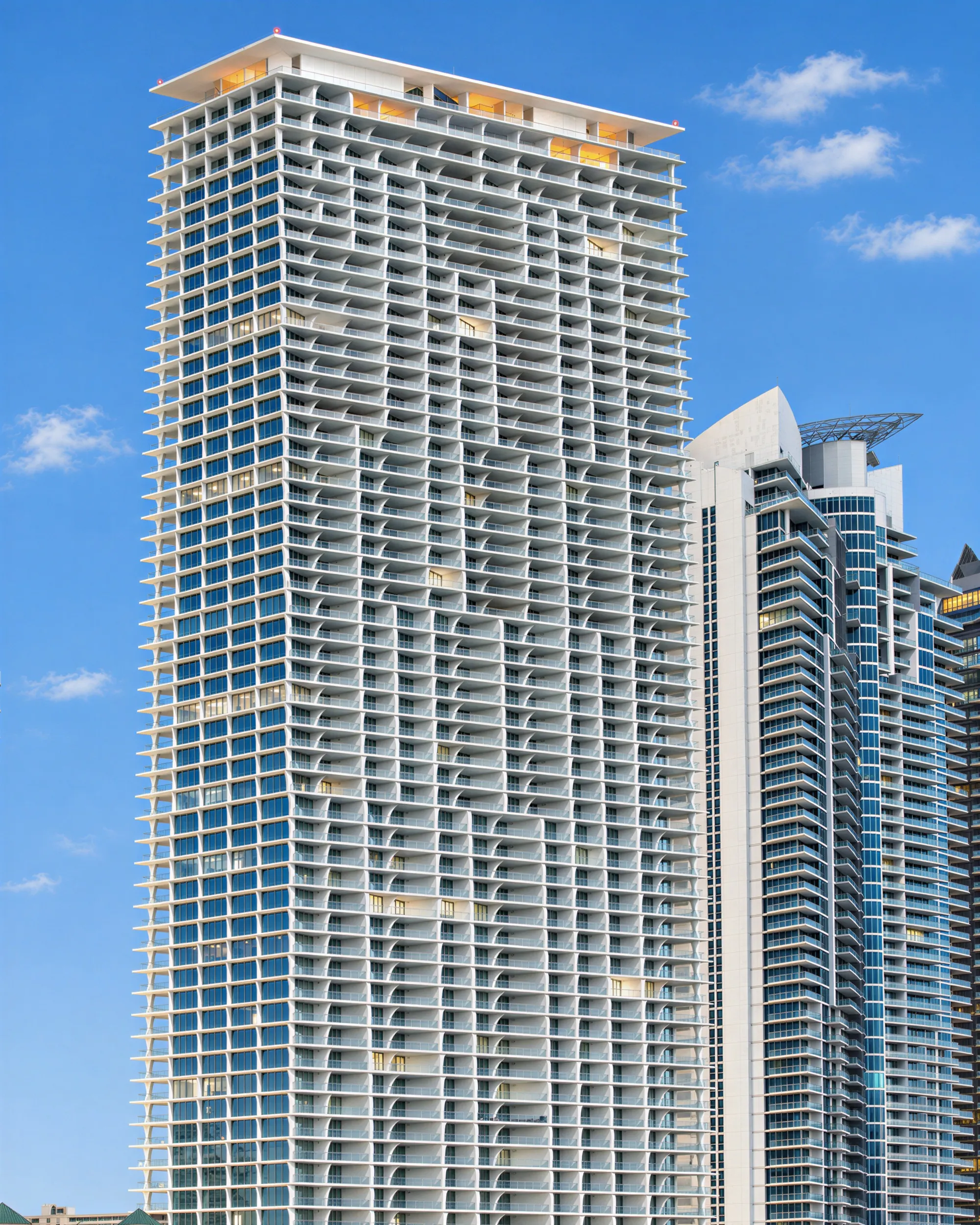
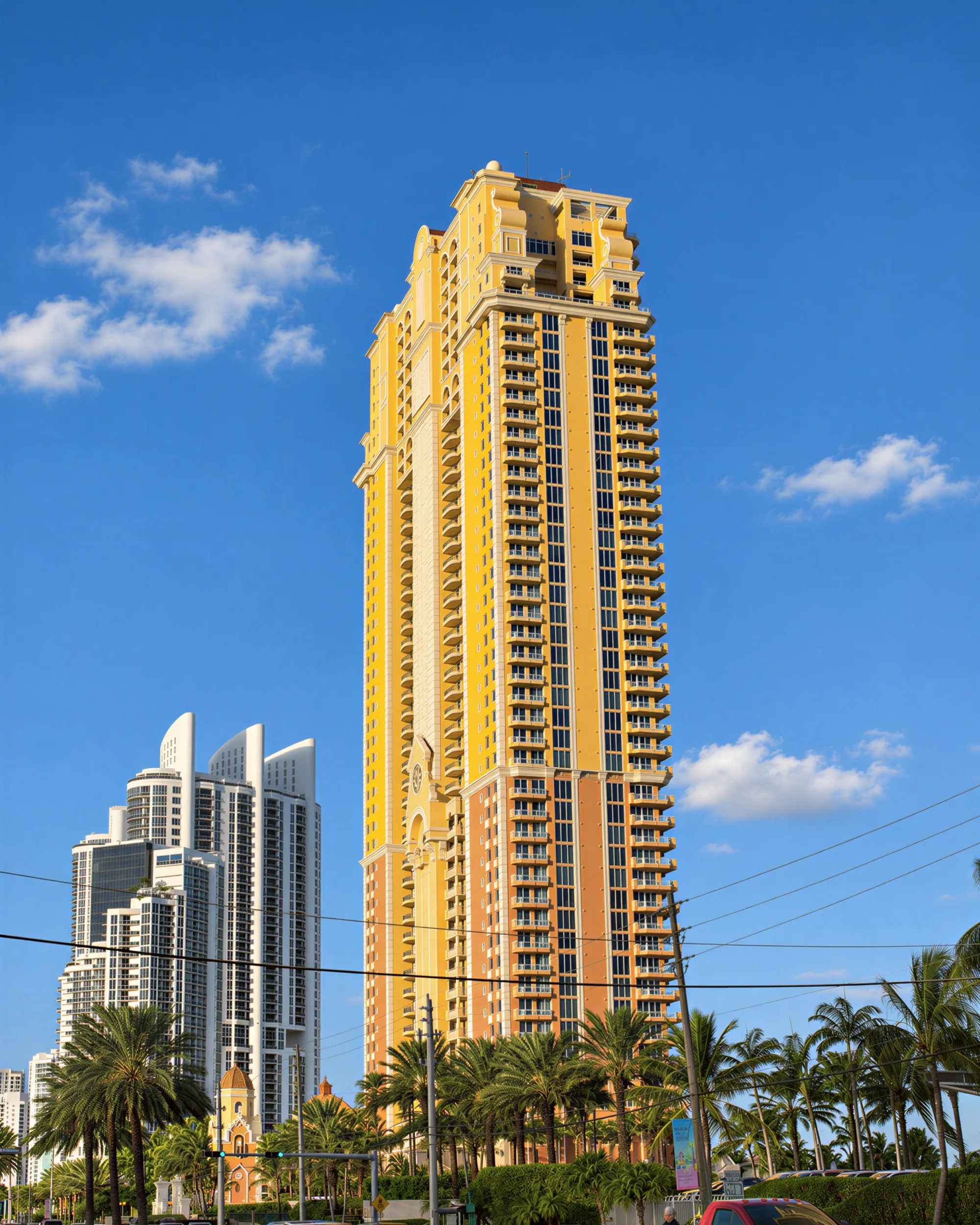
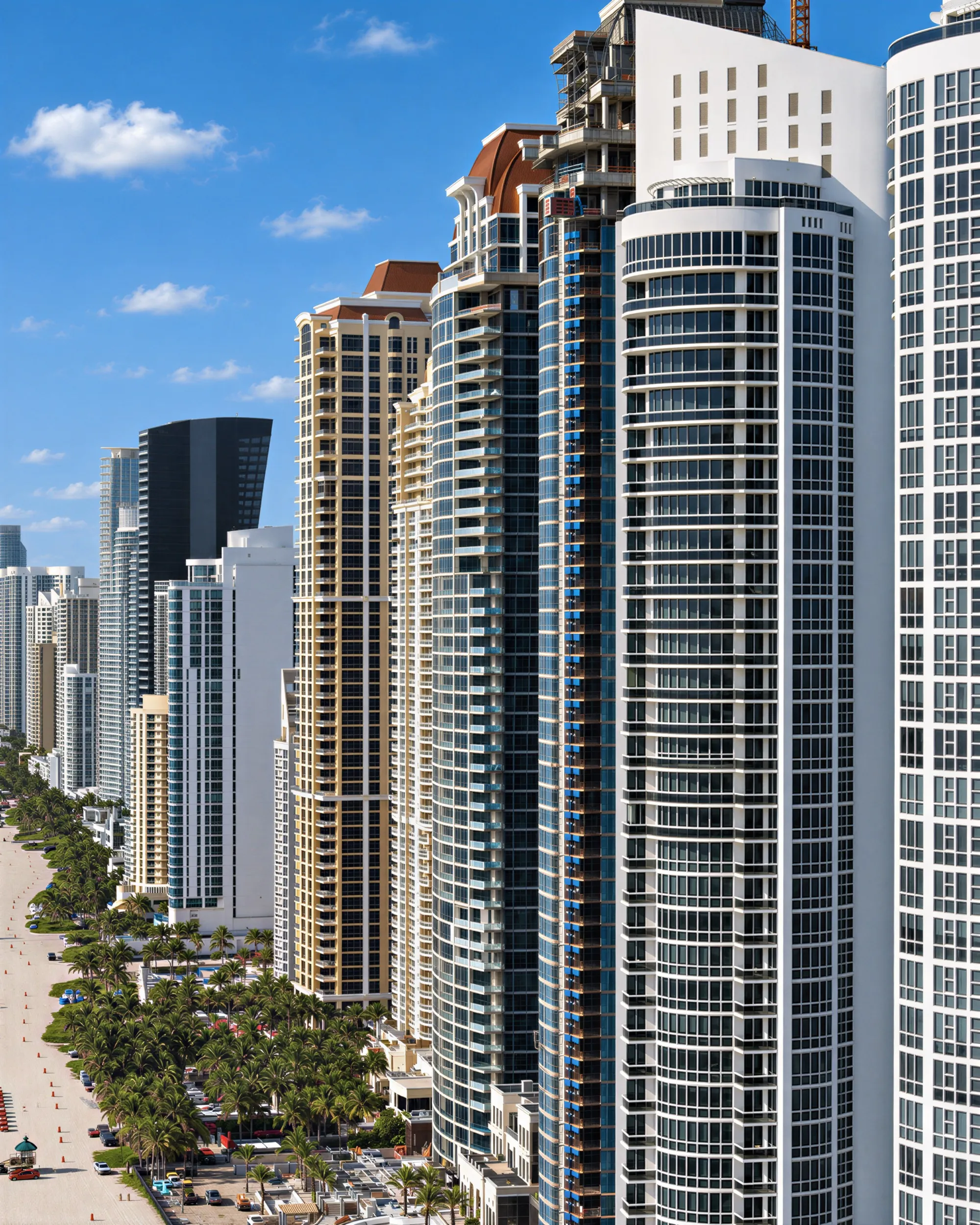
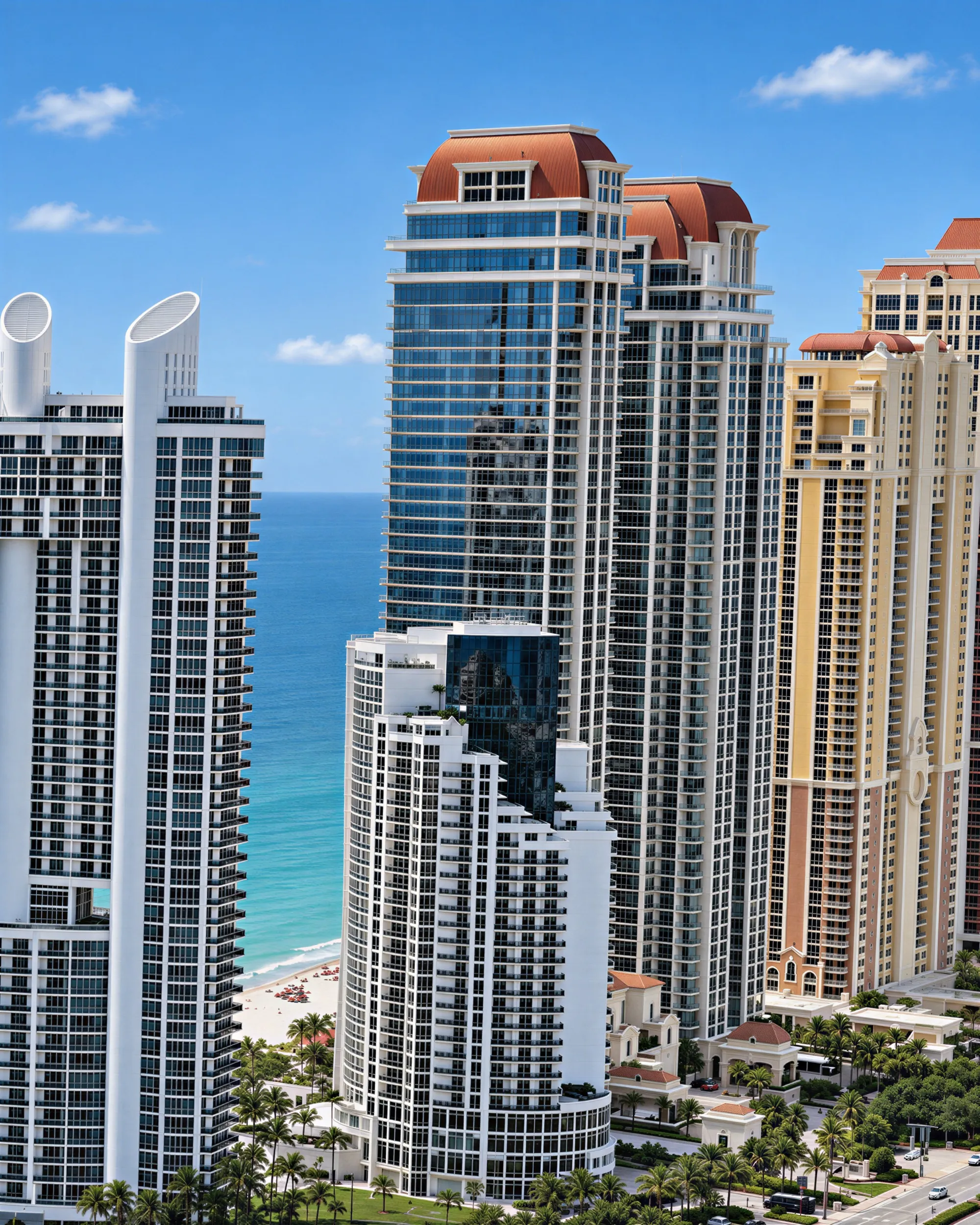
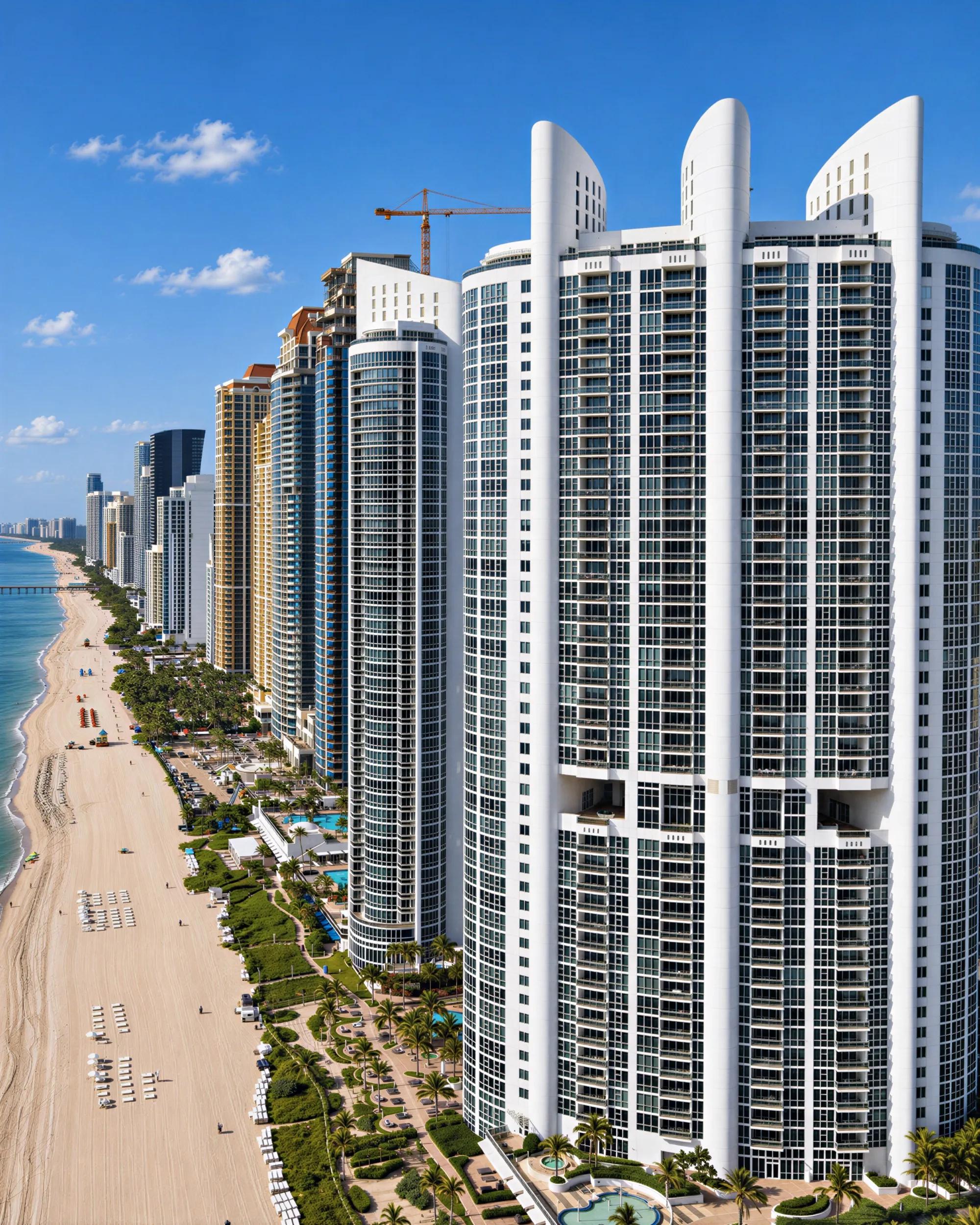
On both FEMA maps, today's and the one that takes effect in 2027, the tower itself stands outside the area with a 1% chance of flooding in any year. The current maps, in force since 11 September 2009, place the building in Zone X (unshaded), where flood risk is minimal.
Toward the sea the parcel crosses Zone X (shaded), with a 0.2% annual chance of flooding, then Zone AE, the 1% annual-chance area, with a base flood elevation of 8 feet (2.4 m). At the beach it enters Zone VE, where storm waves strike and building rules are strictest; there the elevation is 10 feet (3.0 m). In Zone AE a mortgage lender usually requires flood insurance.
A base flood elevation is the height water is expected to reach in a 1%-a-year flood, measured from the map's reference level (NGVD29 on the current maps); it is never a depth of water above the ground.
The revised maps, effective 19 February 2027, keep the building in Zone X (unshaded) and the beach in Zone VE, at 10 feet measured from a newer reference level (NAVD88). Between the two they draw Zone AO, an area of shallow flooding where the figure given is the expected depth of water: 3 feet (0.9 m) here. The VE line moves some 50 meters closer, to about 50 meters east of the building's map point from about 100 meters today. All of these are readings of FEMA's National Flood Hazard Layer, not official flood-zone determinations.
Like all of Sunny Isles Beach and Golden Beach, the address sits in Miami-Dade Storm Surge Planning Zone B, where storm surge, the sea water a hurricane pushes ashore, is a risk from Category 2 storms upward. The county orders evacuations by each storm's track and projected surge, not by category alone.
Flood insurance. The National Flood Insurance Program (NFIP) covers up to $250,000 for a residential building and $100,000 for contents. A condominium association's building policy can reach $250,000 multiplied by the number of units, or $48 million for the 192 units in the recorded condominium. At these values, cover above the NFIP limits is bought privately.
Windstorm insurance. Citizens, Florida's state-backed insurer of last resort, may not write a unit owner's policy where the unit's combined dwelling and contents replacement cost is $700,000 or more. The threshold rises to $1 million in counties where the state insurance regulator finds too little competition. What counts is the cost of rebuilding and refitting the unit, not the price paid; the association's policy for the building is a separate matter. An insurance agent can say whether a given unit qualifies.